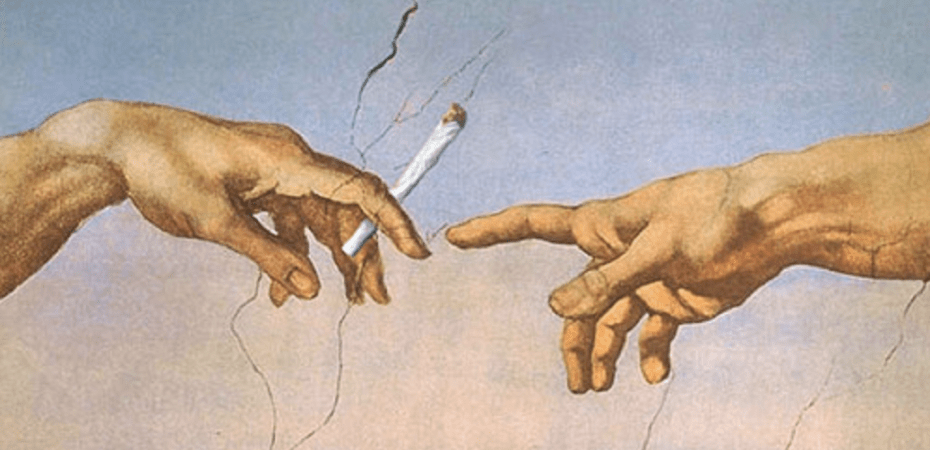
By Wes Annac, Culture of Awareness
(Continued from part 1)
Opening the Chakras: A Visualization Exercise
Emily also recommends a visualization to boost your power and connect with people on a personal level.
During a meditation session, imagine your chakras opening and expanding. Bring to your memory your previous interactions with loved ones (or anyone else) as you imagine each chakra expanding so widely that it reaches out to the chakras of others.
Intend to feel connected with all of creation, and focus on your own consciousness while connecting with others and exploring your visualized yet very real oneness. I’d also recommend sending positive energy to those whose chakras you visualize, because it’ll help them and you to develop these energy centers.
Emily warns against using cannabis for spiritual purposes if you have to pass a drug test. Fortunately, higher consciousness can be accessed with or without it. Some might not find meditation as valuable without it, but a good, deep meditation can be achieved either way.
Sacramental Use
Rich Michaels from The Massachussets Cannabis Reform Coalition likens the religious use of cannabis to the religious use of wine, writing that both are considered a sacrament.
It’s been consumed in rituals to praise the goddess Shiva, and it’s consumed in an edible form known as bhang during the Holi festival (or the ‘festival of sharing love’).
Christianity, Hinduism and Rastafari are three examples of religions that either do or have at one time considered cannabis sacred, and today, several spiritual movements exist which are centered on its power to awaken the mind and heart.
It was used religiously as early as 1000 BC (some say it was used earlier), and many rituals centered on its use were also centered on celebrating or cultivating oneness with the cultures’ respective deities.
It’s been consumed in rituals to praise the goddess Shiva, and it’s consumed in an edible form known as bhang during the Holi festival (or the ‘festival of sharing love’).
The Indian Hemp Drugs Commission Report even stated that cannabis is such a big part of religious ceremonies that it seems crucial to the religious experience as a whole. Plenty of western spiritual smokers will tell you the same thing: it’s not required but it is an important and meaningful aspect of their way of life.
Rich compares outlawing cannabis to outlawing the traditional Hindu religion itself.
Cannabis, Christianity and Rastafari
Hinduism is an obvious example of religious cannabis use, but as Rich writes, there are plenty more. The Holy Anointing Oil referenced in Christian and Jewish texts had cannabis as one of its main ingredients, and Jesus was doused with this oil as part of a ritual wherein he received profound visions.
Rastafari, which the Supreme Court recognizes as an established religion, treats cannabis as spiritual liberation in plant form.
“The more people smoke herb, the more Babylon fall.” – Bob Marley
Bob Marley, who spread the Rasta philosophy to the world, once said that the more people consume the herb, the further the oppressive power structures that limit religious freedom fall.
Cantheism: A Religion Built Around Cannabis
Apparently, a new school of cannabis-centered philosophic thought has surfaced that’s known as ‘cantheism’. Rich writes that cantheism isn’t a religion with a specified philosophy like Rastafari, but a spiritual movement for any and all thought related to man’s interaction with the cannabis plant.
The spiritual cannabis user who doesn’t identify with religion could perhaps identify with cantheism. I’ll probably share more on it soon, because it’s a fascinating movement that appears to unite various schools of thought regarding cannabis.
The argument for the morality of the U.S. laws against religious cannabis use is that they prohibit no specific religion from growing or using it. Instead, all religions are prohibited from using a plant that, as Rich reminds us, has been used for thousands of years. Oppression is oppression, whether it’s against some or all.
Plant Frequencies
Teal Swan writes that each plant possesses a unique frequency that, in the case of cannabis, can be imparted onto a spiritual seeker for the purpose of evolution.
For many users, cannabis teaches them to release resistance (i.e. their rigid thoughts, worries and expectations), be open to oneness, surrender to the flow of life, and embrace effortless, blissful states of being.
Everyone reacts to it differently because of the difference in frequency from person to person, and the user’s vibration shifts to match that of the plant.
The binding of vibratory frequencies between the plant and its user was/is referred to as ‘friending’, and when you ‘friend’ the plant, you can pass between different states of consciousness.
You enter a temporary state of being where you coexist with the cannabis consciousness, and it’s in this state that wisdom and intuitive guidance can be imparted along with higher vibrations.
Teal writes that Shamans see cannabis and other teacher plants as guardians or gatekeepers between the earthly and spiritual.
The binding of vibratory frequencies between the plant and its user was/is referred to as ‘friending’, and when you ‘friend’ the plant, you can pass between different states of consciousness.
Neurotransmitters in the brain are inhibited as a ‘cascade of physiological reactions’ occurs, and for a short time the brain no longer functions at normal capacity. This could be why tasks that require critical thinking are sometimes difficult with cannabis, but for many people, it’s a relief from their mind’s constant thoughts and aggravations.
Any spiritual teacher will tell you that the only way to escape pain and misery is to slow down the mind and get into a space where your thoughts no longer dominate your attention. For many, cannabis is the perfect suppressant of erratic thoughts and subsequent expander of consciousness.
(Continued in part 3 tomorrow. Sources embedded in article.)
 Openhearted Rebellion
right ON! 🙂
LikeLike
Thanks quarksire. 🙂
LikeLike
[…] (Continued from part 2) […]
LikeLike
[…] (Continued from part 2) […]
LikeLike